
Sunday, January 1, 2017


Saturday, December 24, 2016
“…I saw a young black boy…”

‘Abdullaah Ibnul-Mubaarak رحمه الله said:
“I
came to Makkah while it had been stricken by drought and the people were
praying Istisqaa (prayer for rain) in Masjid Al-Haraam. I was by the gate of
Banee Shaybah, when I saw a young black boy who was wearing two pieces of
burlap (a thick cloth usually used to make sacks), one piece wrapped around his
waist and the other tossed over his shoulder. He stood at a secluded place next
to me and I heard him say, “My Lord, the faces are worn due to their sins and
the evil of their deeds, and you have prevented us from rain to discipline the
creation, I ask you O patient and forbearing One, You who His slaves know
nothing of Him except that which is beautiful, give them rain, in this moment,
in this moment.””
Ibnul-Mubaarak
said, “He continued to say, “In this moment” until the sky became filled with
clouds, and the rain descended from every direction, and he sat in his place
making tasbeeh, and I began to cry.
When
he left I followed him to find out where he lives. After that, I went to
Fudhayl Ibn 'Iyaadh who said to me, “Why do you look so depressed?”
I
said to him, “Someone beat us to Allaah, and so He took him as an intimate
companion other than us.”
He
said, “How so?”
So
I told him the story, and he cried out “Woe be to you, O Ibnul-Mubaarak!
Take me to him!”
I
said, “There’s no time at the moment, I’ll find out more about him.”
So
the next morning I prayed Fajr and I went to his residence and there was an old
man sitting at the door. When he saw me he recognized me and said, “Welcome,
O Aboo 'Abdir-Rahmaan. What do you need?”
I
said, “I am in need of a black boy.”
He
said, “I have many”, and so he cried out “Boy!” and a strong
young man emerged, and he said, “You’ll have a good result with this one. He
would be good for you.”
I
said, “I have no need for him”.
So
he continued to bring out boy after boy, until I saw the boy that I recognized,
so when I saw him my eyes teared. He said, “Is this the one?”
Fatawas pertaining Christmas & the Festivals of the Kuffar
Ruling
on the Muslims celebrating at the time of Christmas and decorating their homes
with balloons etc (giving or receiving Christmas cards, saying "Merry
Christmas", allowing your children to take part in Activities at school,
wearing Christmas jumpers, eating Christmas dinners or any of these things
relating to this celebration).
Question:
What
do you say to Muslims in the United Kingdom who celebrate Christmas time by
holding dinner parties in their houses on Christmas or afterwards, for their
Muslim families, such as preparing roast turkey and the other dishes of the
traditional Christmas dinner, and they adorn their houses with balloons and
paper chains, and they do the “secret Santa” tradition, whereby each relative
brings a gift for one of the people present and these gifts are brought to the
party to be given to the one for whom he bought it, without the recipient
knowing who he is. [“Secret Santa” is a new, growing custom among non-Muslims
who celebrate Christmas, and it is in accordance with their belief in the myth
of Santa Claus].
Is
this action regarded as halaal or haraam, if no one is attending this party
except Muslims (relatives and family members)?.
Praise
be to Allaah.
There
is no doubt that what is mentioned of celebrations is *haraam*, because it is
an imitation of the kuffaar. It is well known that the Muslims do not have any
festival apart from Eid al-Fitr and Eid al-Adha, and the weekly “Eid” which is
Friday (Yawm al-Jumu‘ah). Celebrating any other festival is not allowed and is
either of two things:
✖either
it is an innovation (bid‘ah), if it is celebrated as a means of drawing close
to Allaah, such as celebrating the Prophet’s Birthday (Mawlid);
✖or
it is an imitation of the kuffaar, if it is celebrated as a tradition and not
as an act of worship, because introducing innovated festivals is the action of
the people of the Book who we are commanded to differ from.
So
how about if it is a celebration of one of their actual festivals?
Decorating
the house with balloons at this time is obviously joining in with the kuffaar
and celebrating their festival.
Wednesday, December 21, 2016
The Stages Of Life & Death In The Dunya & Aakhirah

An emotional Khutbah entitled:
The Stages Of Life & Death In The Dunya & Aakhirah
Abu Mu'aawiyah Abdullah
-Toronto, Canada-
The Stages Of Life & Death In The Dunya & Aakhirah
Abu Mu'aawiyah Abdullah
-Toronto, Canada-
Listen to "The Stages Of Life And Death In The Dunya And Akhirah - Abu Mu'aawiyah Abdullaah Hassan - Khutbah" on Spreaker.
Meaning of Laa Ilaaha IllaAllaah : Its Prerequisite and Impacts on the Individual and the Society
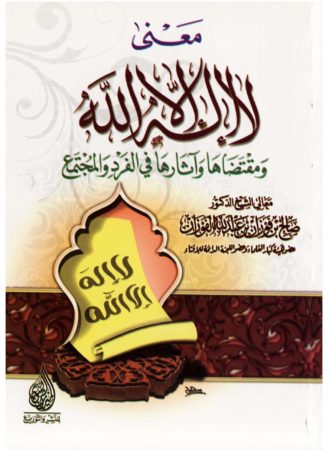
Meaning of Laa Ilaaha IllaAllaah : Its
Prerequisite and Impacts on the Individual and the Society
معنى لا
إله إلا الله ومقتضاها وآثارها في الفرد والمجتمع
The Excellence, Importance
& the Role of the Scholars in Islâm
From Whom should our
Knowledge be sought?
Who are Our Scholars?
Including a Short Biography of Sheikh Saâlih Al Fawzan
(حفظه الله)
By Br. Nawwas Al-Hindi (حفظه الله)
@ Masjid ad-Dar as-
Salafiyyah
{Lesson 1-10 in English}
Daily authentic supplications, from the Sunnah of Muhammed صلى الله عليه وسلم.
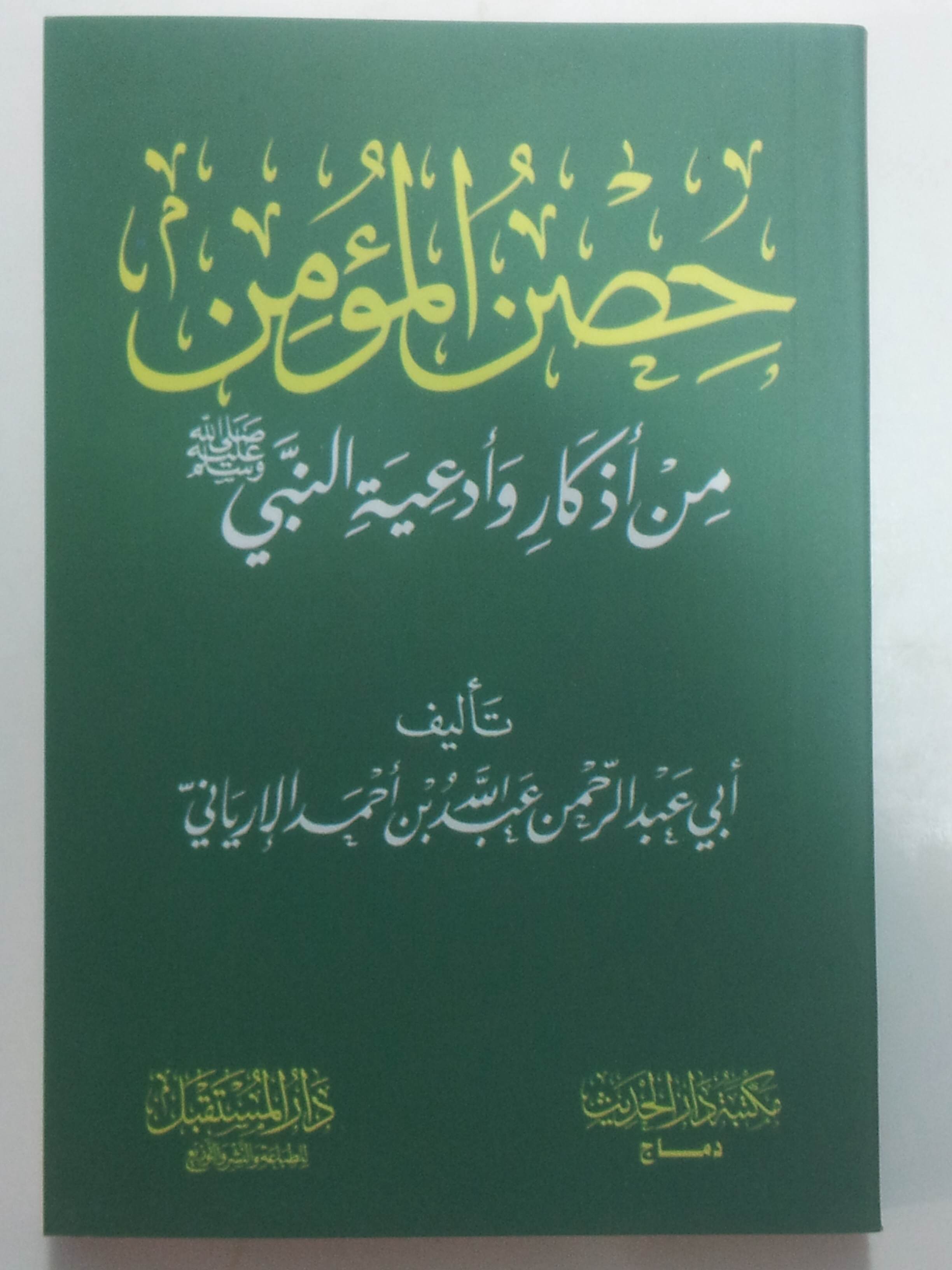
حصن المؤمن من أذكار و أدعية رسول صلى الله عليه
وسلم
From: Darul
Hadeeth
Daily authentic supplications
of a Mu’min
by Sheikh Abdullah Iriyani
💥The Tribulations Facing the Ummah and the Solutions
Question: What is your advice regarding the tribulations that
one has to deal with when faced with events of a global scale, and what is the
stance of a student of knowledge regarding that?
Sheikh Saalih Al-Fawzaan حفظه الله:
These events will not stop occurring; rather they will become more frequent if the Muslims do not return to their religion – If the Muslims do not return to practising their religion correctly; or else the occurrence of these events will increase and Allaahسبحانه و تعالى will place the enemies of Islam in authority over the Muslims.
O’ brothers, when an error occurred from some of the companions at the battle of Uhud, -a single error from some of the companions: when the Messengerصلى الله عليه و سلم commanded them to stay on the mountain in order to guard the Muslims from being attacked from the back – so that the disbelievers would be unable to advance towards the Muslims from behind them.
When the battle took place the Muslims were victorious initially, so they began gathering the spoils of war. The Messengerصلى الله عليه و سلم had commanded (the archers): ”Do not leave the mountain whether we are winning or losing”.
But when the archers saw the Muslims gathering the spoils of war they thought the battle was over, so some of them said: ”let’s go down and participate in helping our brothers gather the spoils of war”. Their commanding general said to them: ”Didn’t the prophet command you not to leave the mountain whether we are winning or losing?!”. But they did not take heed and descended the mountain leaving only their commanding general and a few archers who ended up being martyred – may Allaah be pleased with them. The polytheists ceased the opportunity by climbing up the mountain to advance upon the Muslims from behind them. The Muslims, unaware of this, thought their backs were being guarded and were thus trapped between the disbelievers from in front and behind.
There is *NO* such thing as "Study time!"
Sheikh
Saalih bin 'Abdil-'Azeez Aala Sheikh حفظه
الله said,
"There
is no such thing as ”study time” for the student
of knowledge! This is because all of his time is spent in seeking knowledge. In
the morning and in the evening, his mind is preoccupied with the various issues
of knowledge."
~ Al-Manhajiyyah fee
Talabil-'Ilm
How Sins can Cause you to Enter Paradise.

Ibnul Qayyim al-Jawziyyah رحمه الله تعالى said:
‘Indeed a slave commits a sin and enters Paradise
through committing it and he performs a good deed and enters the Hellfire
through performing it.’
It was asked ‘How is this (possible)?’
Ibnul Qayyim رحمه الله تعالى answered:
‘A sin is committed and thus does not
cease to be before his eyes (causing him to be) fearful of it, concerned about
it frightened and weeping due to his regret of doing it. Feeling ashamed due to
this action before his Lord The Most High, with his head lowered between his
hands, and his heart broken and despondent due to it.
Therefore that sin will be more
beneficial to him than numerous acts of obedience could be. As a consequence
these previously mentioned matters are the cause for this slave of Allaah’s
happiness and success until that sin will be a reason for him to enter
Paradise.
A slave of Allaah performs a good deed
and he continues to view it as if he has performed a favour for his Lord and is
egotistic due to that good deed, and he is conceited, vain and arrogant due to
the sin. So he says I did such and such action (boasting) causing to him to
inherit the characteristic of pride, haughtiness and adopting an overbearing
attitude.
Ar-Riya (Showing Off)

Sheikh Salim al-Hilaali حفظه الله
Ar-Riya is censured
in the Book and the Sunnah. From them is the Statement of Allaah سبحانه و
تعالى:
"So woe to
the worshippers, who are neglectful of their prayers. Those who want to be seen
(by men)."
[Al-Ma'un 107:4-6]
As for the ahadith,
some of them have already been mentioned in the chapter of shirk, since ar-Riya
is the minor shirk. Some will be mentioned here, insha'Allaah.
Know O Muslim, O
slave of Allaah, that the word riya is taken from the word ruyah (to be seen).
So the one to be seen is viewed by the people as one seeking self-esteem
amongst them. So at times one would seek self-esteem by one's actions in this
world.
Riya is of many
types and forms, its nature and tendency is that it invalidates the actions as
stated in the Book and the sunnah. Allaah سبحانه و تعالى says:
"Like those
who spend from their wealth to be seen by men, and they do not believe in
Allaah and the Last Day. Their example is like the example of a hard rock on
which is a little soil, then on it falls heavy rain which flows off it and they
will not be able to do anything with whatever they have earned and Allaah does
not guide the disbelieving people."
[Al-Baqarah 2:264]
The Prophet صلى الله
عليه و سلم said:
"What I
fear for you the most is the minor shirk, that is ar-riya. Allaah will say on
the Day of Judgement when He is rewarding the people for their actions: Go to
those for whom you did riya for in the world then see if you find the reward
with them."
[Related by Ahmad (5/428, 429) and
al-Baghawi in Sharh as-Sunnah (4135) from the hadith of Mahmud bin Lubayd, رضي الله
عنه, with
an authentic chain upon the conditions of Muslim]
The Prophet صلى الله
عليه و سلم said:
"Shall I
not inform you of what I fear for you more than the Masih ad-Dajjal? It is the
hidden shirk. It is when a man stands up for prayer, then beautifies his prayer
for another to look at."
Subscribe to:
Posts (Atom)